|
Embarrassed by your feet or do you have painful feet?
You need the help of a certified foot and ankle specialist.
Maybe you should have Dr. Ravaei help you. He is a board certified foot & ankle specialist. He is qualified & certified by American Board of Podiatric Orthopedics, one of the two boards certified by the American Podiatric Medical Association. He is currently licensed in four different states. He received his training in Temple University, School of Podiatric Medicine. He further received his post-doctoral training in several different institutions across various states. He has spent many years to combine and refine the techniques and treatments he has learned at various locations to provide the optimum treatment for his patients.
Dr. Ravaei was appointed chief of department of podiatric surgery at Saint Joseph Hospital in 2003. During the time that he held the position, he trained many residents and students who are in successful practice now. For two consecutive years, 2004-2005, he was awarded the title of “best teaching attending” by the students and residents. He enjoys teaching and providing different techniques to various problems.
Furthermore, he has been featured in several news articles and TV Newsmagazine. In these news outlets he has been asked about his innovative techniques. Most importantly, Dr. Ravaei is a caring individual. He realizes that many patients could be scared and he attempts to provide the least invasive procedure with the human touch. Dr. Ravaei has a particular interest in corrective and cosmetic foot surgery. He realizes that looking good and feeling good could be extremely important to many patients. He tries to provide the most cosmetically appealing results while correcting the underlying problem. Many physicians attempt to correct the structural deformity; however, they care very little about the cosmetic results leaving patients with unsightly results. Dr. Ravaei has encountered many patients with less than desirable results and has attempted to correct such problems. One should realize that this does not mean the patients will not be left with any marks; however, Dr. Ravaei will utilize the same techniques used by plastic surgeons to create the best possible results.
Dr. Ravaei currently has five locations in southern California. All of these locations are close to major highways, major cross sections and public transportations. The office staff is friendly and will try to make you feel most comfortable. Also, some of our locations have the latest digital -site X-ray; this innovative technology exposes the patient to the least amount of radiation and provides the image instantly. We will also do our best to see you the same day, should you have an emergency. If the above two paragraph did not convince you to pay us a visit maybe this would help. Dr. Ravaei provides a free initial consultation to answer any questions you might have. And remember when your feet hurt you hurt all over.
Common Foot Problems Treated by Dr. Ravaei and Specialists
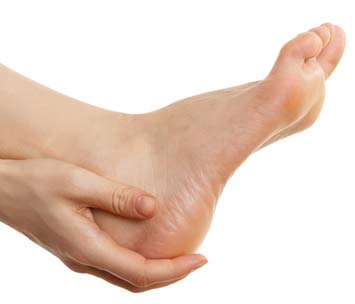
Heel Pain Syndrome - Heel Pain is the result of inflammation of the band of fibrous connective tissue running along the bottom of the foot, from the heel to the ball of the foot. It is common in women who wear heels for long periods of time, or in individuals who are wearing the wrong size shoes. Click here to get more detailed information about Heel Pain.
Neuroma - Neuroma is typically the result of excessive inflammation of the band of fibrous connective tissue running along the bottom of the foot, from the heel to the ball of the foot. The pain is more pronounced early in the morning when the patient is not wearing any shoes. Treatments include wearing foot inserts, stretching regularly, and undergoing physical therapy. Click here to learn more about Neuroma of the Foot.
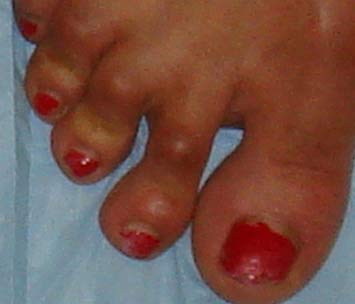
Corns - Corns are caused by friction between the foot and the shoes. Corns can develop anywhere on the foot, and are common in individuals who are wearing shoes and socks for long periods of time. Corns can be treated by wearing bigger shoes and splints, and surgical treatment is available with a scar-less procedure.Click here for more information about Corns.
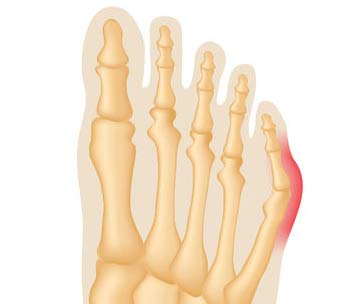
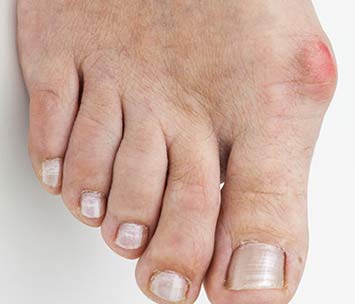
Bunions- A bunion is an enlargement of the joint at the base of the big toe joint. The bunion forms when the bone or tissue at the big toe joint moves ot of place. If you are experiencing redness, inflammation, swelling, soreness or pain in the foot, these are all symptoms of a bunion formation. Bunions are hereditary, and typically occur in women. High heeled shoes are a cause of the disease, but bunions can be treated with physical therapy and other non-surgical treatments. Click here to learn more about bunion treatments.
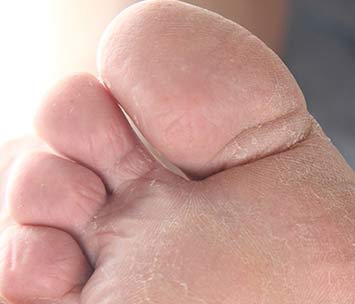
Athlete's Foot - Athlete’s Foot is a skin infection caused by a fungus between the toes and/or on the soles of the feet. It is common in people who are near water for long periods of time, and symptoms include red, itchy, and scaly skin that forms into a blister. Treatments include medications to stop sweating, and changing socks and shoes regularly. Click here for more information about Athlete’s Foot.
Ingrown Nail - Ingrown Nails are a condition in which the corner of the nail will dig into the skin and cause pain, irritation and infection. Ingrown nails can be a very painful condition and difficult to treat on your own. Click here for more information about ingrown nails and treatment options with Dr. Ravaei.
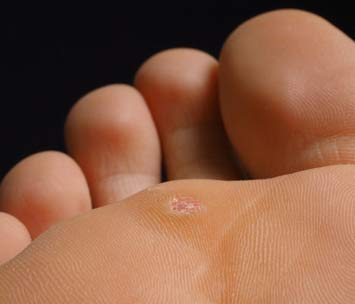
Warts - Warts are a soft tissue infection caused by a virus. Warts on the feet can become painful if left untreated, and the infection can spread if the wart is not treated or cared for appropriately. Click here for more information about warts and treatment options.
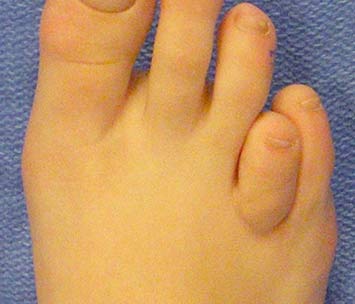
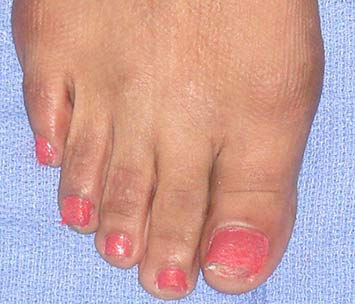
Brachymetatarsia - Brachymetatarsia typically occurs in women and is a condition where the bone in the fourth toe stops growing during childhood, leading to a floppy toe. This deformity can cause significant pain when the shoe rubs against the skin and toe; both surgical and non-surgical treatments for this condition are available. Click here for more information about Brachymetatarsia.
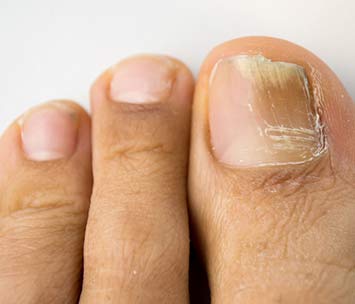
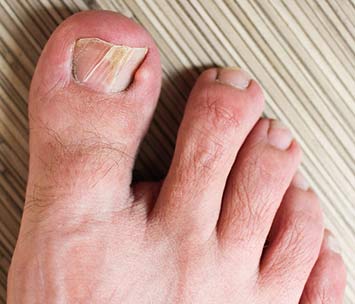
Fungal Nail Infection - A fungal nail infection is caused by an infection of both the nail plate and the nail bed. It can occur in both men and women, and is more common in those who do not change their socks or shoes frequently, and those who sweat often. Click here for more information about fungal nail infections and treatment options available from Dr. Ravaei.
Hammertoe - Hammertoe is a bending of the toe at the first joint of the digit. This bending causes the toe to appear like an upside-down V from the side; it can be a very painful condition that worsens when the individual wears tight shoes and socks. Surgery is usually the best option for individuals suffering from hammertoe. Click here for more information and treatment options for hammertoe.
Long Second Toe - a long second toe is hereditary; in this deformity of the foot, one of the toe bones is significantly longer than the others. A long second toe can make it difficult to wear shoes comfortably, and many people with this problem experience corns, calluses and blisters from poorly fitting shoes. Click here for more information about long second toe.
|